
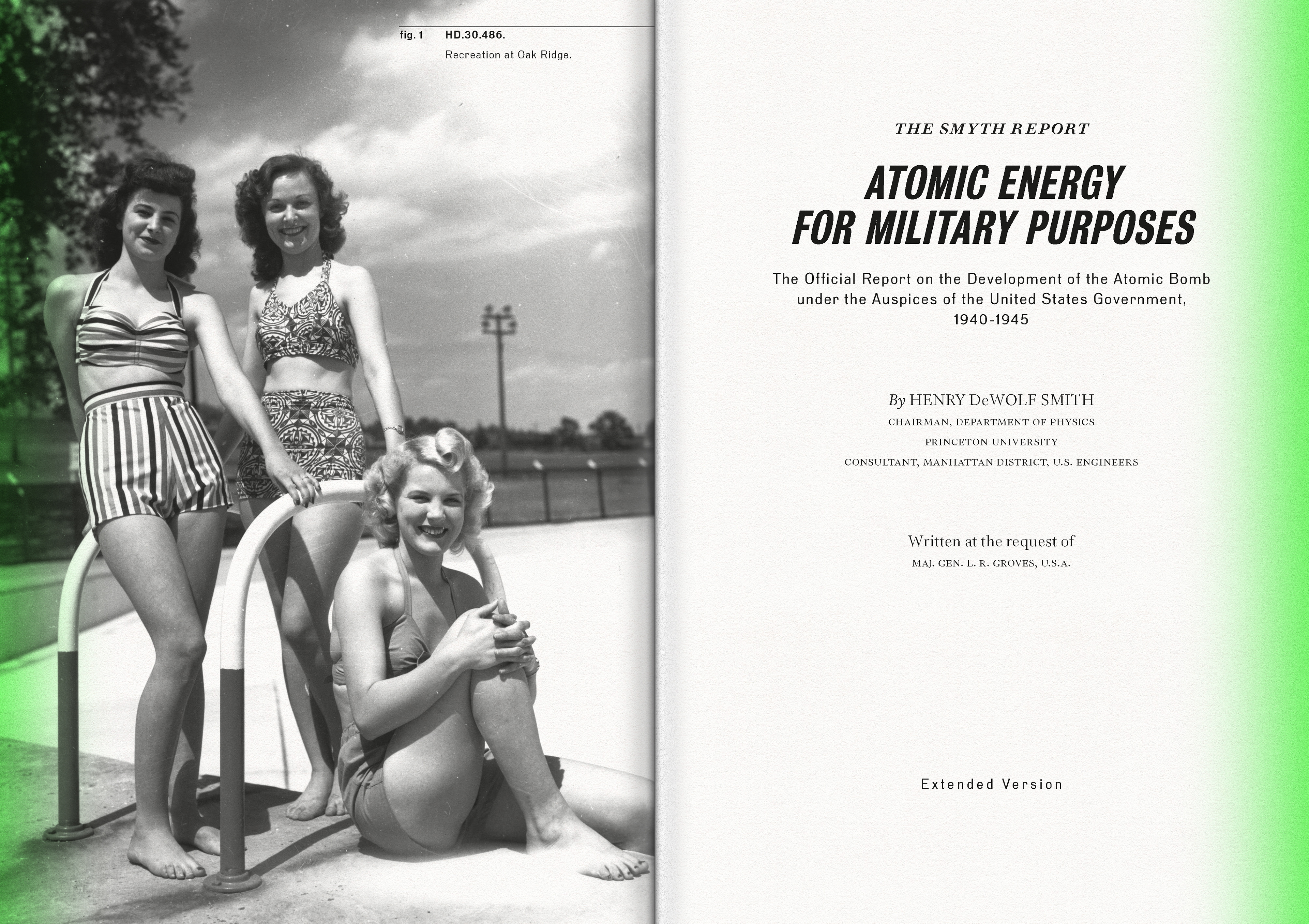

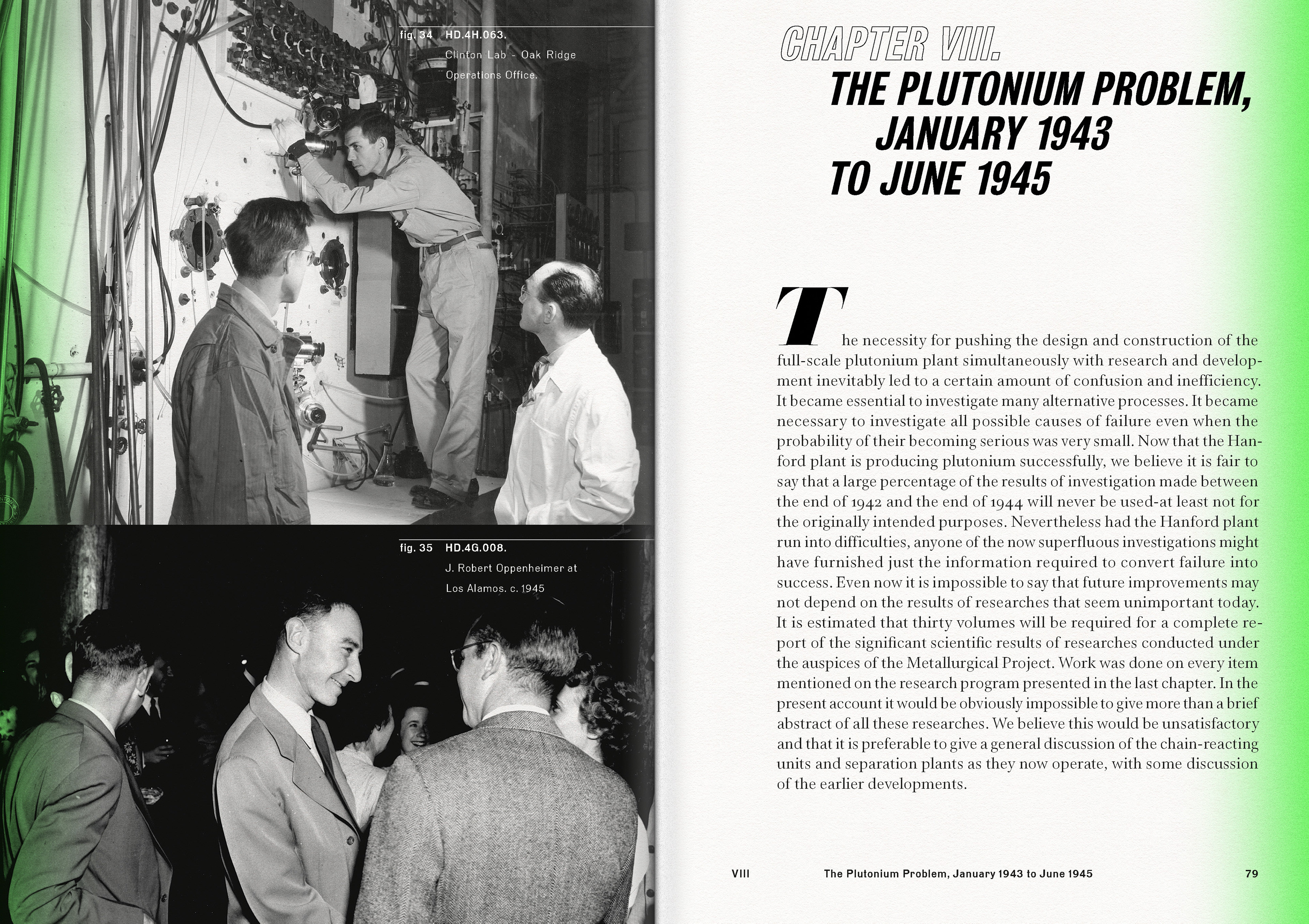
First published in 1945, the Smyth Report offered the first official account of the scientific and technical foundations of the Manhattan Project. Written by Henry DeWolf Smyth, it was conceived as a carefully calibrated document: transparent enough to inform the public, restrained enough to protect classified knowledge. Its language is precise, measured, and deliberately impersonal — reflecting both the urgency and the secrecy of its historical moment.
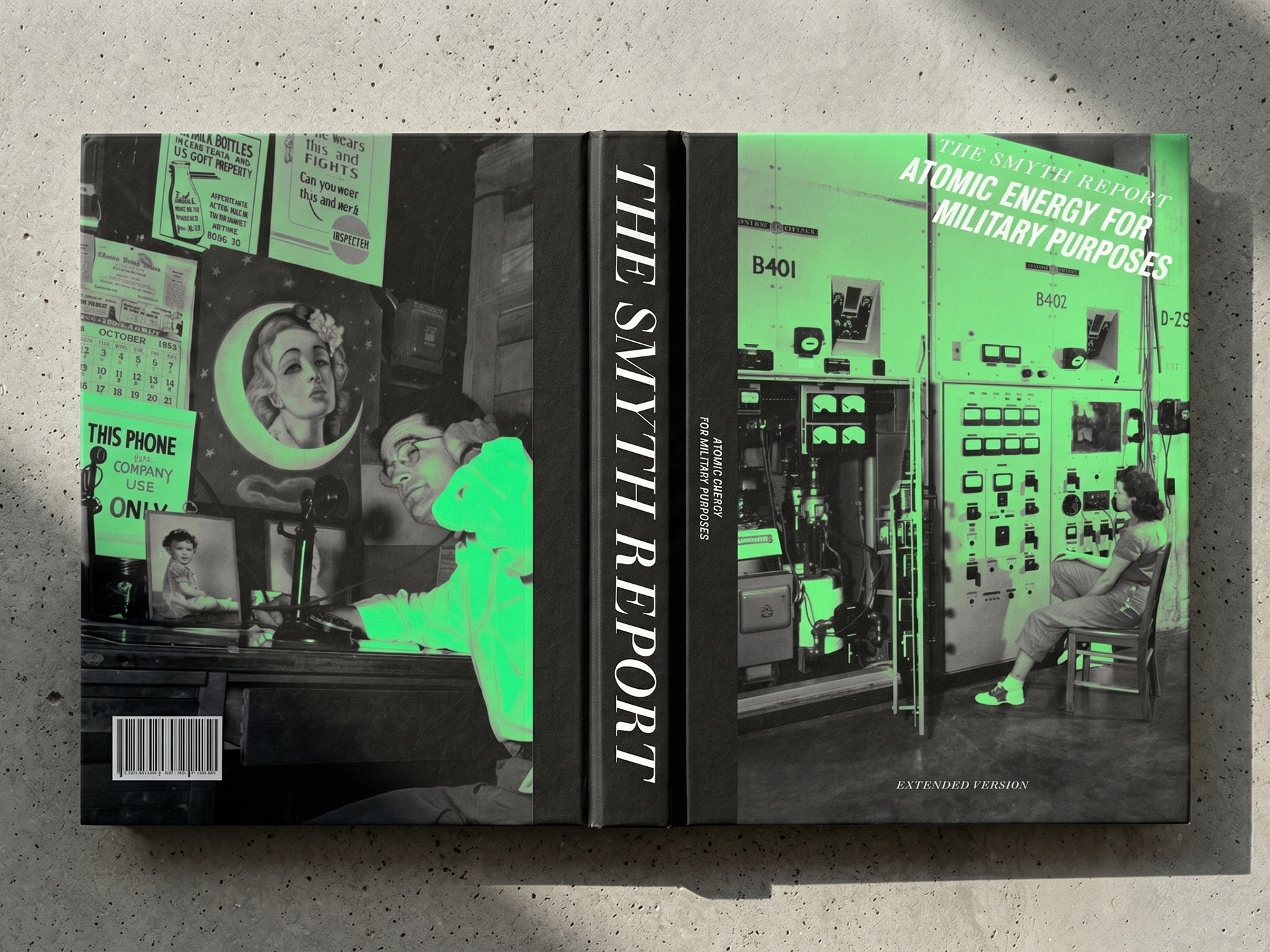
Visual motif: The recurring green-tinted images and gradients evoke the presence of invisible radiation—an atmospheric visualization of what cannot be seen, yet permeates the narrative throughout the book.
This new edition approaches the document from a complementary angle. While preserving the integrity of the original text, it stages the report alongside photographic material depicting everyday life in Oak Ridge during the war years. Streets, dormitories, cafeterias, classrooms, and domestic interiors enter into dialogue with equations, reactor descriptions, and process diagrams. The result is an expanded contextualization that restores visibility to the human environment in which the project unfolded.
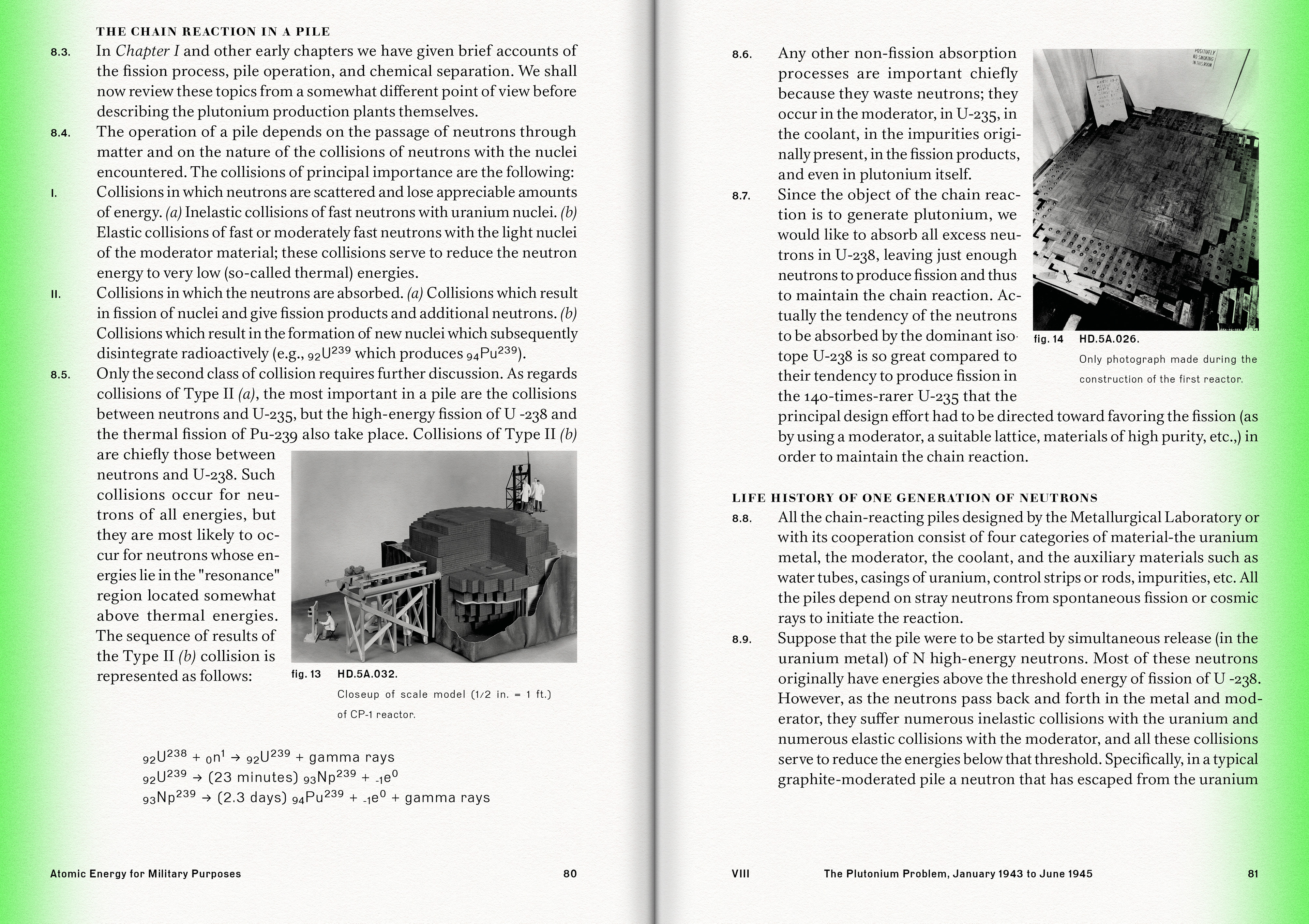
Editorial note: Despite its expanded typographic staging, the original structure and sequence of the text have been preserved in full.
Oak Ridge was not merely a site of industrial production; it was a rapidly constructed community shaped by wartime necessity. Thousands of workers — scientists, engineers, clerks, laborers, families — inhabited a landscape defined by fences and uncertainty. By juxtaposing the technical narrative of the report with images of daily routines, this edition foregrounds the lived dimension of a project often reduced to abstraction or geopolitical consequence.
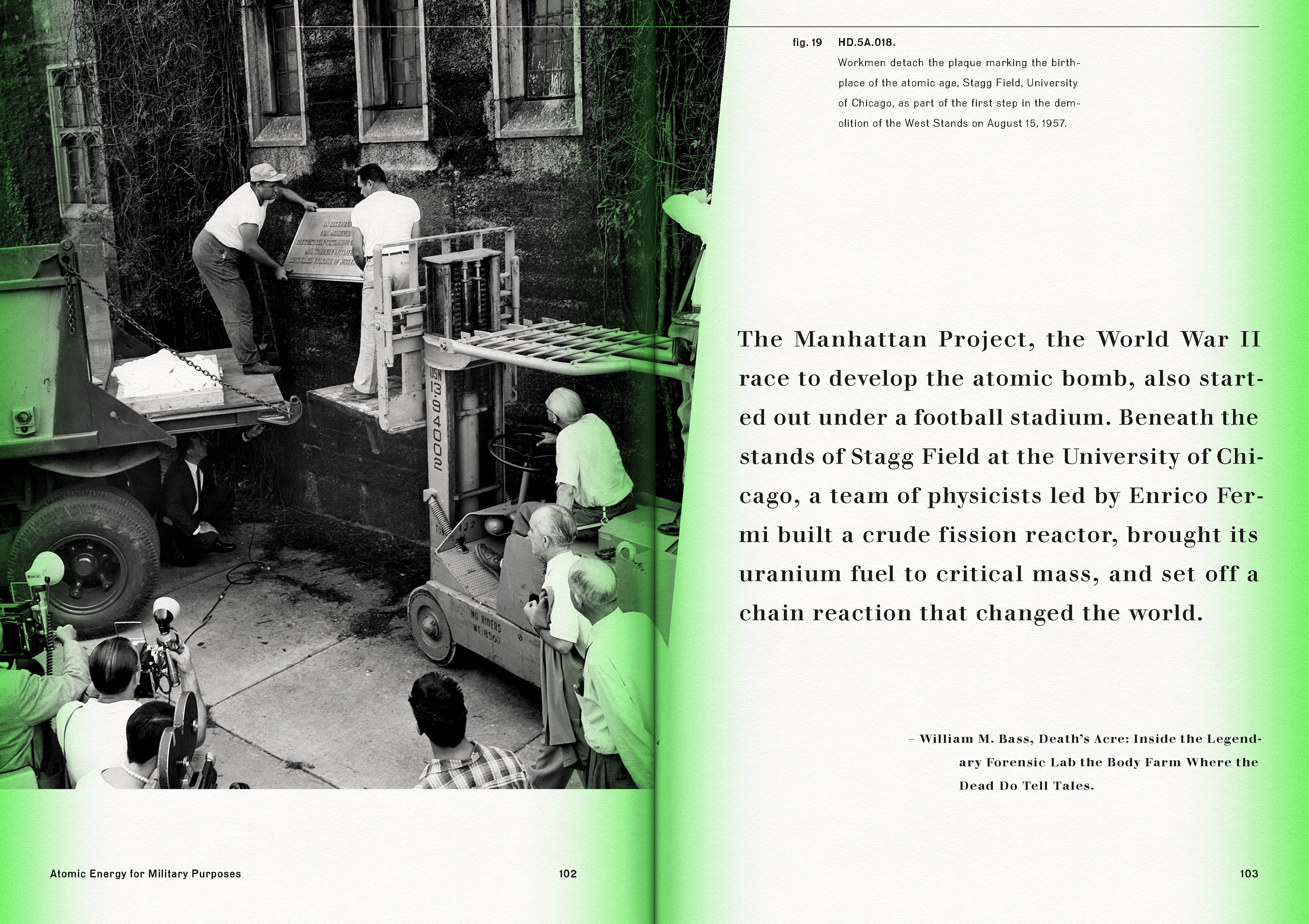

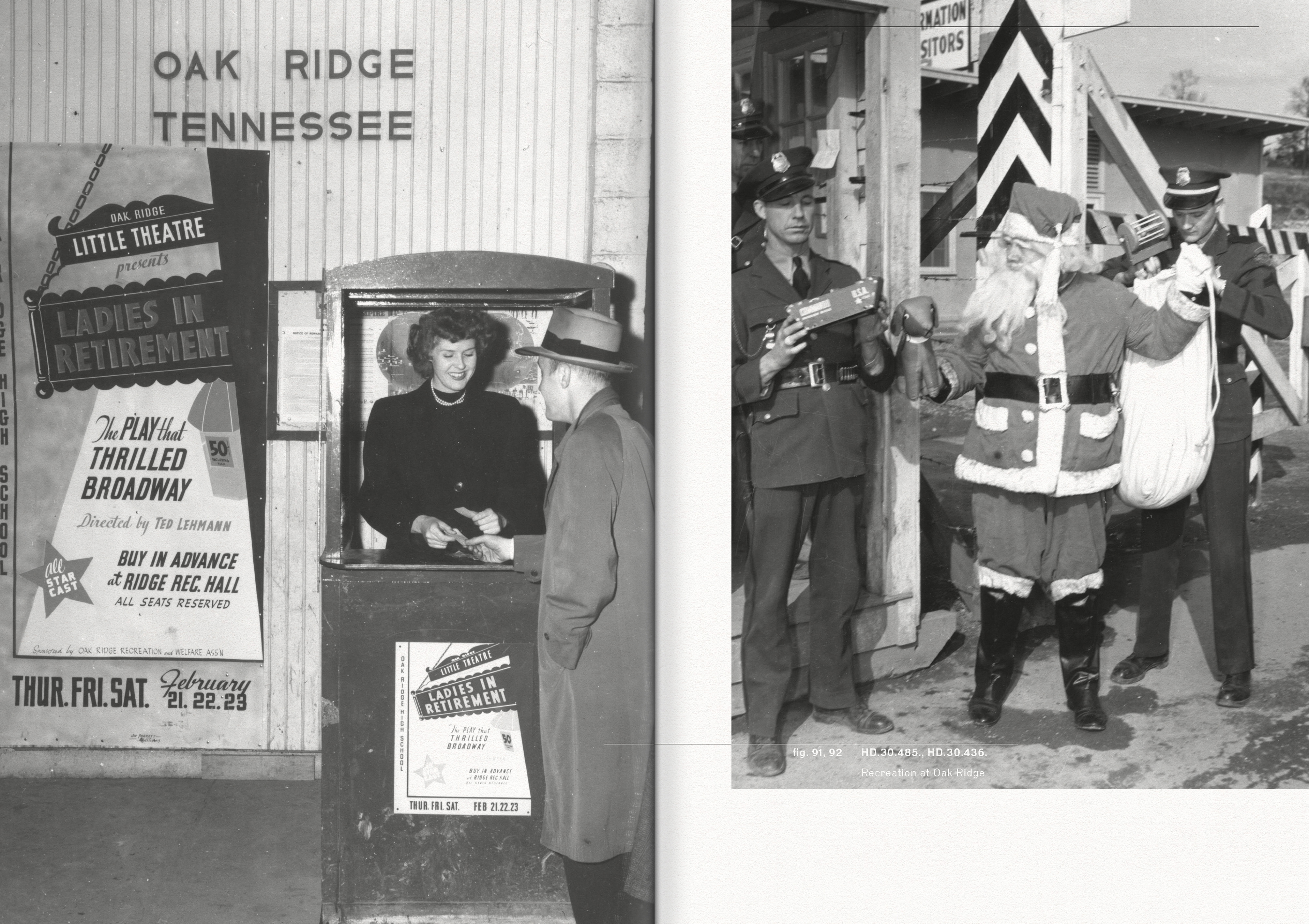
The significance of the Manhattan Project remains immense, not only for its scientific achievement but for its ethical and political ramifications. This volume does not seek to resolve those tensions. Instead, it situates the foundational document within a broader human frame, reminding readers that behind every calculation stood a network of places, relationships, and ordinary lives.
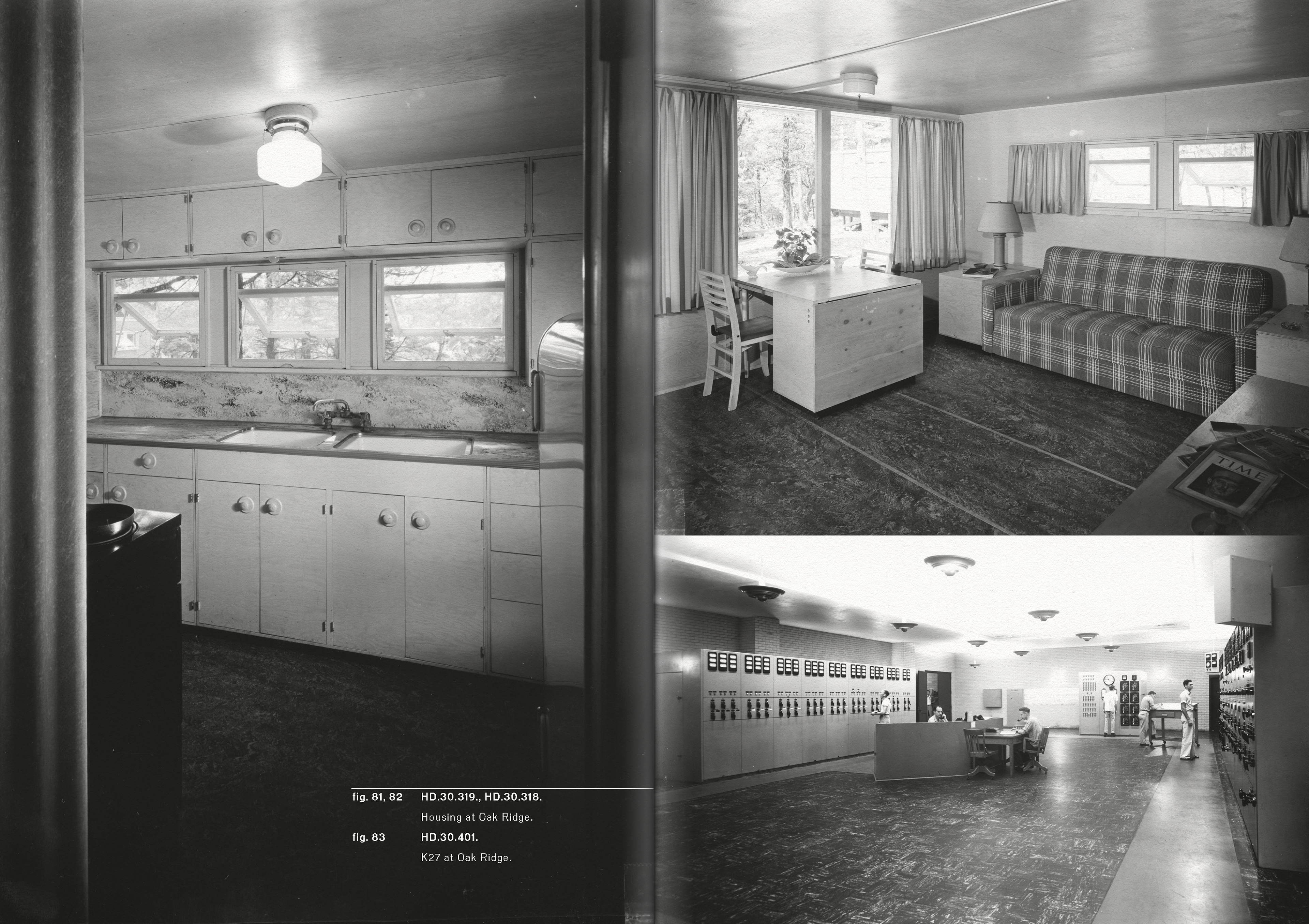
Photographic selection: Industrial sites — laboratories and production facilities — are deliberately juxtaposed with domestic interiors, portraying Oak Ridge as a purpose-built environment where scientific enterprise and private life were inseparably intertwined.
Information
The Smyth Report — Atomic Energy for Military Purposes (Extended)
case study, c. 180 pages.
2025